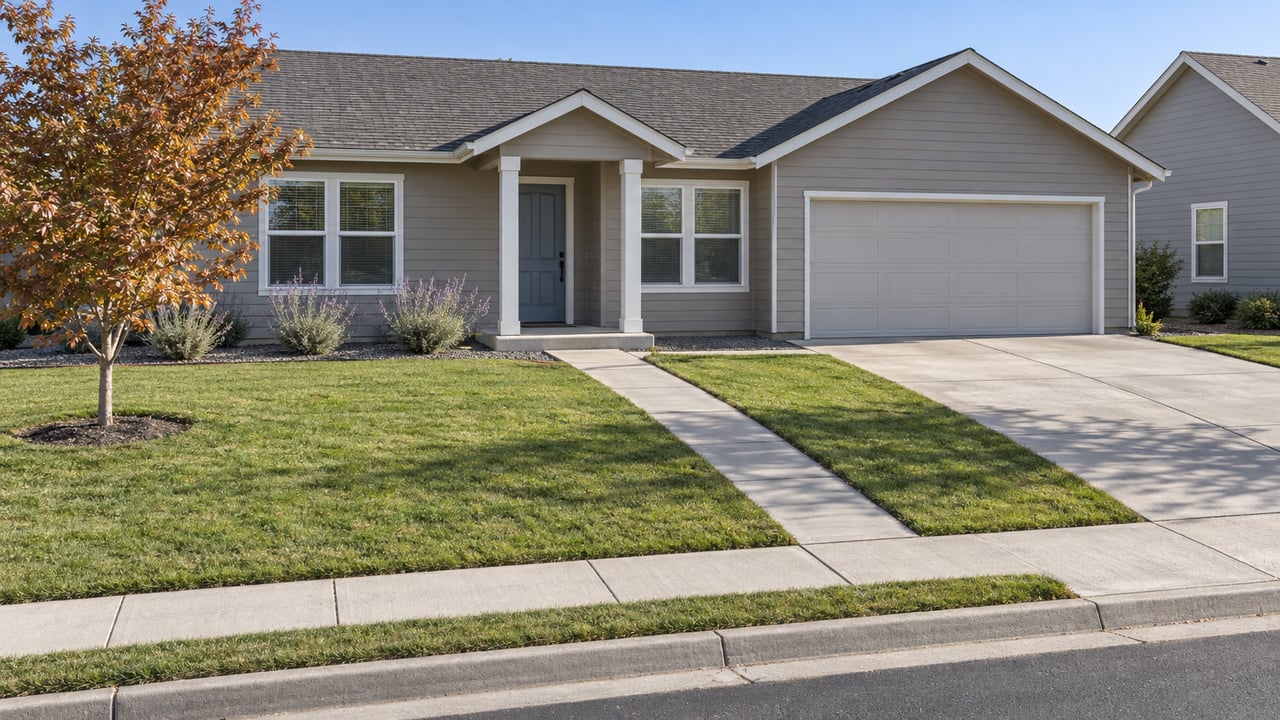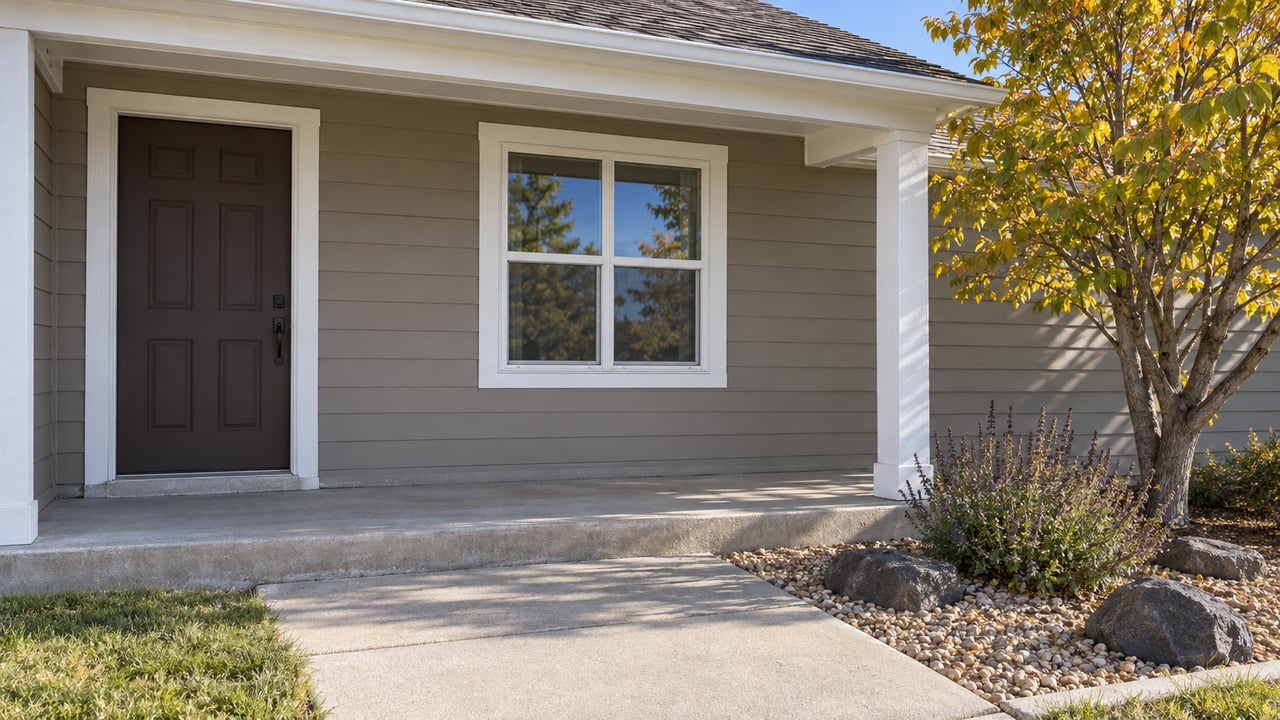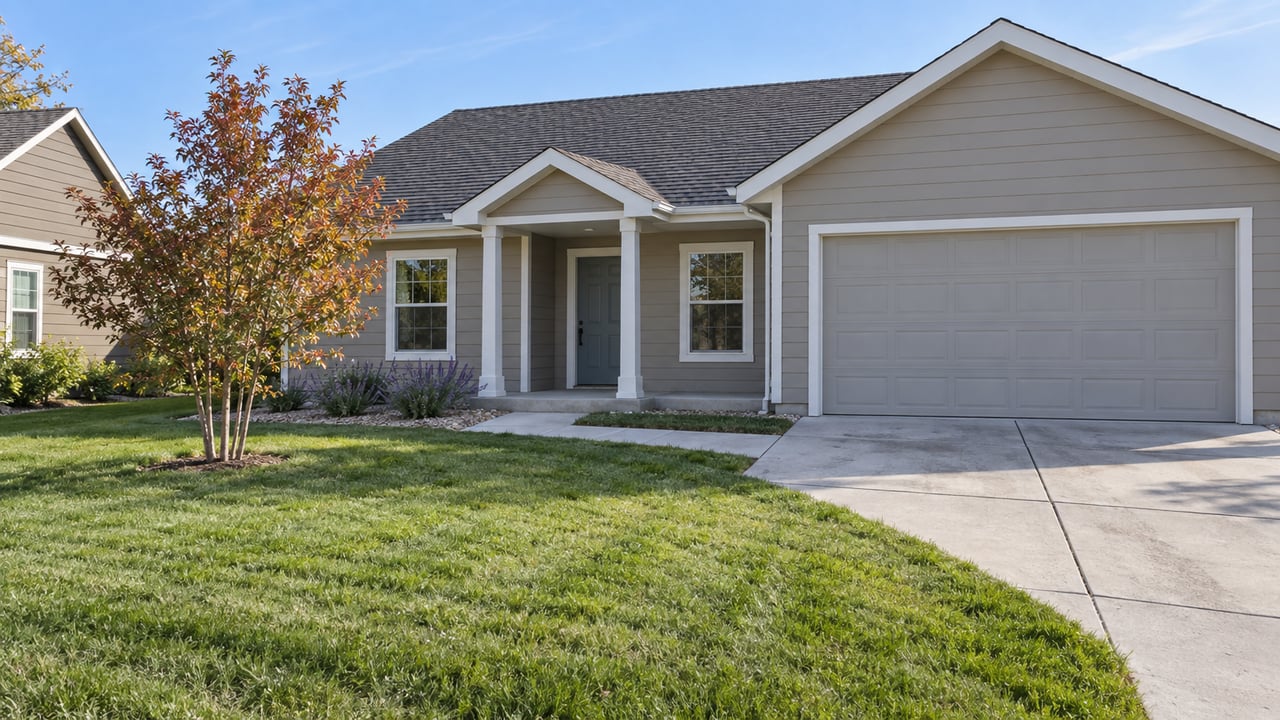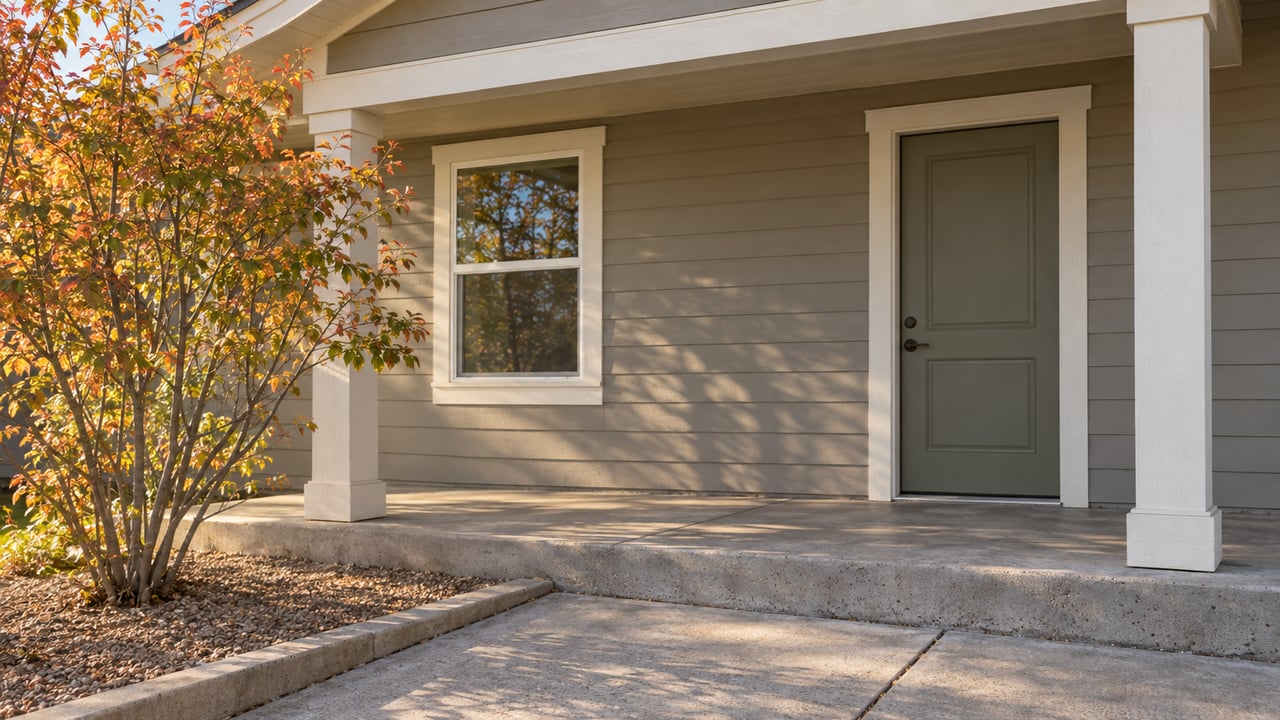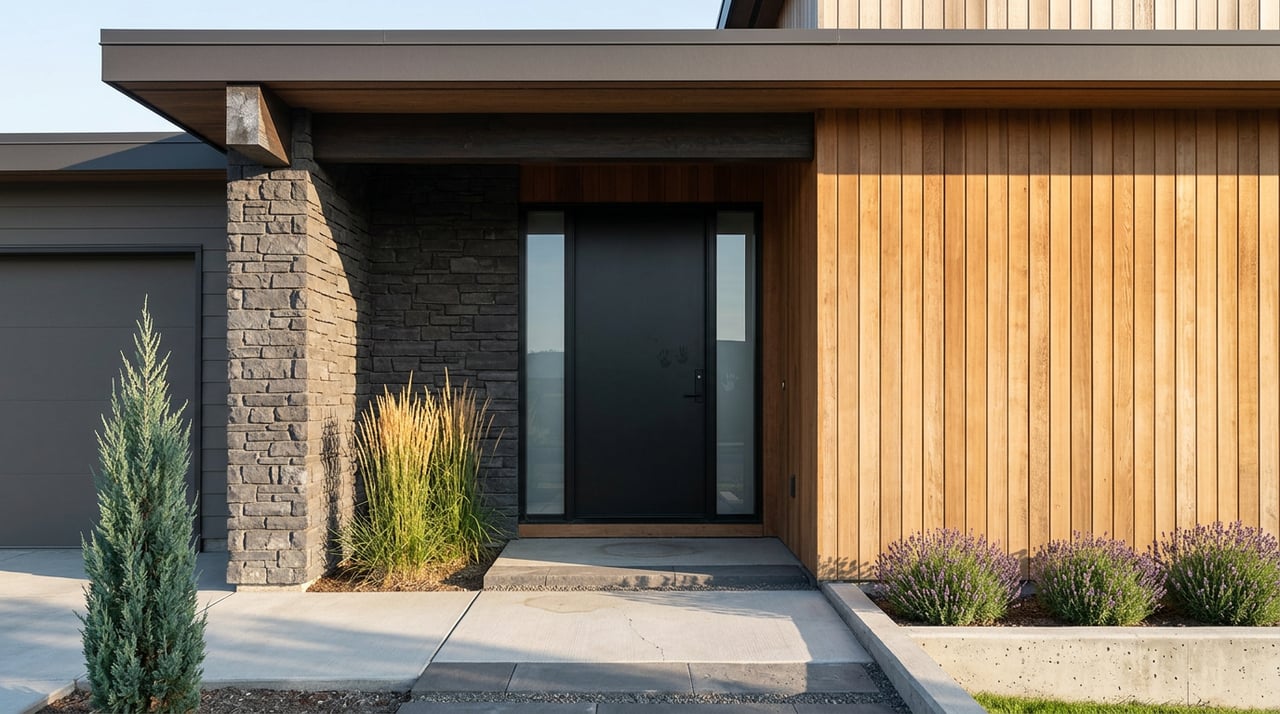
Somewhere south of Van Giesen Street sits a house that was built in eight-foot sections, trucked to its lot, and set down on wood posts and piers instead of a poured foundation. It has 2x2 exterior walls. It was never meant to last this long. And it is still standing, still occupied, still selling, eighty-plus years after a government contractor screwed it together to house a Hanford worker during World War II.
That house and the half-million-dollar new build a few blocks away are both counted as "Richland" when someone pulls up the city's median home price. They should not be treated as the same market.
The Number Everyone Sees, and What It's Actually Made Of
Tri-Cities home prices climbed modestly through the first half of 2026, with the region's median sales price landing at $442,000, up from $435,000 over the same stretch of 2025. Richland outpaced that. Its median has been pushing toward $500,000, and industry reporting attributes a meaningful share of that lift to sales of luxury homes priced above $1,000,000, not to across-the-board appreciation. That distinction matters more than it sounds like it should.
If you're comparing Richland to Kennewick or Pasco using a single median figure, you're comparing a number that's being pulled upward by a thin slice of high-end transactions against a housing stock where thousands of homes were built to a wartime government spec in 1943 and 1944. Those two facts do not describe the same market, even though they're reported inside the same city limits.
A Government Housing Program Built in Under 90 Days
The reason Richland's older housing looks and behaves differently than typical Tri-Cities inventory traces back to a single contract. In 1943, the federal government hired Spokane architect Gustav Albin Pehrson to design an entire town's worth of housing for the managers, engineers, and operators arriving to work on the Hanford Engineer Works. Pehrson had roughly 90 days to design both the floor plans and the community layout. He labeled each floor plan with a letter, which is why locals still call them Alphabet, ABC, or Letter houses.
The first one, a B-house, was occupied on July 30, 1943. Assignment wasn't first-come-first-served. Chief supervisors and their superiors were placed in the larger D, G, and E houses, while operator-to-foreman classifications were assigned to the smaller A and B duplexes and the prefabricated units. Richland is still home to nearly 1,600 of these alphabet houses today, out of a wider construction program that eventually topped 5,000 units once later additions and prefab variants are counted. According to the National Park Service, all of it was government-owned rental housing until October 1955, when the FHA began appraising homes for sale to the residents who'd been renting them, with sitting tenants given first right of refusal.
That last detail is easy to skip past, but it's the reason today's alphabet houses are privately owned at all. Richland wasn't developed as a typical subdivision. It was built as federal housing stock, sold off to residents a decade later, and it has been changing hands as private real estate ever since.
The Prefab Detail That Changes a Loan File
Not every alphabet house was framed conventionally. Some were prefabricated: built off-site in eight-foot sections, assembled on the lot, and set on post-and-pier foundations rather than a poured perimeter foundation, with 2x2 exterior walls instead of standard framing. That construction method made sense in 1943, when the government needed housing fast for a classified project on an impossible deadline. It creates a genuinely different conversation with a lender in 2026.
Appraisers and underwriters look closely at foundation type on any file, and a home without a permanent, poured foundation invites more scrutiny than one with a standard perimeter footing, regardless of how charming the house is or how long it's been standing. This isn't unique to Richland. It's a general principle in residential lending: as Capital Home Mortgage explains, FHA-approved appraisers assess whether a property meets minimum safety and livability standards before a loan closes. A buyer who falls for the original hardwood floors and the Douglas fir framing in a 1943 alphabet house needs to have the foundation conversation with a lender early, not after an offer is already written.
| Legacy Alphabet & Prefab Stock | New Construction & Luxury Segment | |
|---|---|---|
| Typical era built | 1943 to mid-1950s | 2010s to present |
| Foundation | Often post-and-pier (prefab units); some standard | Poured perimeter foundation, standard |
| Historic protection | None, regardless of Gold Coast District status | Not applicable |
| What drives value | Lot, original condition, renovation history, floor plan letter | Square footage, finishes, view lots, new-build premium |
| Financing consideration | Foundation type may draw extra appraiser scrutiny | Standard conventional and jumbo underwriting |
| Price behavior in 2026 | Tracks closer to Tri-Cities-wide median ($442K H1 2026) | Disproportionately pulling Richland's median toward $500K |
Gold Coast Isn't the Protection Most Buyers Assume
There's a second layer of confusion worth clearing up before you go house-hunting on this side of the argument. Richland has a Gold Coast Historic District, and it's easy to assume that means the alphabet houses inside it are legally protected. They aren't, and the district itself isn't even made up primarily of the original WWII-era stock.
When the city inventoried its older housing for possible inclusion on the National Register of Historic Places, the collection that actually met the criteria turned out to be mostly post-war houses built during the Cold War ramp-up, some of them still Pehrson designs, but from a later building phase. That collection became the Gold Coast District, a designation that acknowledges the history without preserving the houses. The original 1943 and 1944 alphabet houses, which sit primarily south of Van Giesen Street, aren't covered by any protective designation either.
As Tri-Cities Business News reported, Teresa Knirck, a Richland Parks and Recreation volunteer who co-hosts monthly history walks through the neighborhood, put the practical reality plainly: "You can tear one down. You can remodel it within an inch of its life." There's no ordinance stopping a new owner from doing either. What holds these houses together as a recognizable group is informal. Owners trade information in a private Facebook group, hunt down salvaged original doors, and choose to maintain period details because they want to, not because a code requires it.
What This Means If You're Comparing Richland to the Rest of the Tri-Cities
If you're shopping by median price alone, Richland looks like it's simply gotten more expensive than Kennewick, Pasco, or West Richland. The more accurate read is that Richland is running two markets at once, and only one of them is driving the number you're seeing.
A buyer looking at an alphabet house south of Van Giesen Street is shopping something closer to the Tri-Cities-wide median of $442,000 from the first half of 2026, with the caveats that come from an 80-year-old structure: ask about foundation type before you fall in love with the floor plan, ask what's been changed and what's original, and don't assume the Gold Coast label means anything is protected from a future teardown next door. A buyer chasing new construction or a luxury build is shopping the segment that's actually pushing Richland's median toward $500,000, where the underwriting is conventional but the price tag reflects finishes and lot premiums rather than history.
Neither segment is the wrong choice. They're just not the same product, and treating them as one number when you compare neighborhoods will leave you asking the wrong questions at the inspection.
A Few Questions Worth Asking Before You Write an Offer
Does an alphabet house need a specialized loan? Not automatically. Many have been renovated with permanent foundations over the decades. The point is to confirm foundation type early with your lender rather than assuming a standard conventional file will move without questions.
Is buying in the Gold Coast District different from buying elsewhere in Richland? Not legally. The designation recognizes the area's history but doesn't restrict what an owner can do to the structure, so don't expect the same protections you'd find in a legally preserved historic district elsewhere.
Why does Van Giesen Street come up so often? It's the rough dividing line locals use to describe where the WWII-era alphabet houses cluster versus the newer construction and the post-war stock that makes up the Gold Coast District. It's a useful geographic shorthand, not a formal boundary.
Richland's history is part of what makes it worth a serious look, but history comes with its own due diligence checklist. If you're weighing an alphabet house against new construction, or trying to figure out what a Richland median price actually tells you about your budget, Gavin Vargas can walk you through both sides of this market and help you ask the right questions before you write an offer.
This article is general information, not legal, tax or financial advice. Consult a qualified professional about your situation.